Let me guess. You walk into your office, drop your bag, sit down, and feel… nothing. No spark. No energy. Just beige walls and sad furniture judging your life choices. Yeah, I’ve been there too.
Here’s the thing: your office decor quietly shapes how you think, work, and even feel about your job. That’s not design fluff—that’s real life. I’ve worked in beautifully styled offices that made me want to overachieve, and I’ve worked in dull ones that made Monday feel illegal.
So let’s fix that.
I’m going to walk you through 20 professional office decor ideas that actually work—ideas that balance style, productivity, and “wow, this place feels good.” No pretentious design talk. No pointless trends. Just smart, human-friendly office decor you can actually use.
1. Start With a Clean, Intentional Color Palette
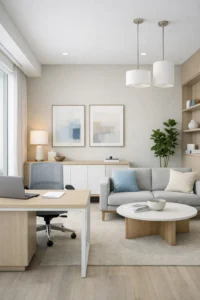
Color runs the show whether you notice it or not. The wrong color drains your energy fast. The right one quietly keeps you focused all day.
I’ve seen offices try to use every color at once, and trust me—it looks like a startup having an identity crisis. A professional office decor setup needs a controlled color palette that feels calm, confident, and intentional.
Neutral shades like white, beige, gray, or soft taupe create a solid base. You can then layer in muted blues, greens, or warm wood tones to add depth. These colors don’t scream for attention, and that’s the point.
Ever notice how some offices instantly feel “grown-up”? That’s color discipline at work. IMO, fewer colors used well always beat loud chaos.
2. Let Natural Light Do the Heavy Lifting
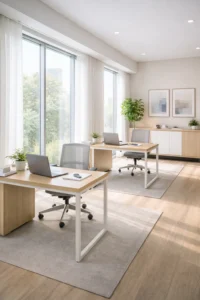
If your office blocks natural light, you’re basically working against yourself. Sunlight boosts focus, improves mood, and makes spaces feel larger without spending a single dollar.
I always position desks near windows whenever possible. Even indirect daylight beats harsh overhead lighting any day. Professional office decor thrives on natural light, not fluorescent misery.
If privacy worries you, sheer curtains solve that problem without killing the vibe. Mirrors placed opposite windows also bounce light around like magic. Ever wondered why bright offices feel more productive? This is why.
No window at all? Then layer warm lighting carefully, but we’ll get to that later.
3. Invest in Furniture That Looks Good and Feels Right
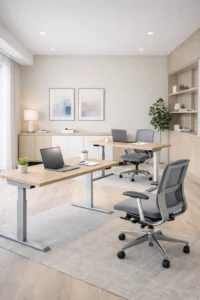
Let’s talk furniture, because cheap office chairs ruin lives. I’m dramatic, but also correct.
Professional office decor starts with functional, ergonomic furniture that supports long work hours. When chairs feel comfortable and desks feel sturdy, people naturally work better. Nobody does their best thinking while silently resenting their seat.
I always recommend clean-lined desks, adjustable chairs, and furniture with a timeless look. Trendy pieces age fast, and suddenly your office looks dated before you finish paying for it.
Here’s a simple rule I live by: if furniture hurts your body or your eyes, it doesn’t belong in a professional office. Easy.
4. Use Wall Art That Actually Means Something
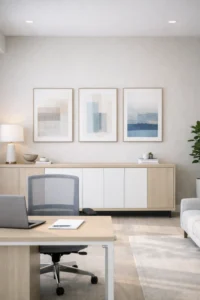
Blank walls feel lazy. Random art feels confused. Intentional wall art makes an office feel complete.
I love artwork that reflects company values, industry themes, or even subtle motivation. Think abstract prints, calming landscapes, or typography that doesn’t feel like a cringey poster from 2009.
Gallery walls also work beautifully when done right. Keep frames consistent, spacing tight, and content meaningful. This approach adds personality without turning the office into someone’s chaotic Pinterest board.
Ever walked into an office and instantly felt its personality? Wall art usually deserves the credit.
5. Add Plants Because Offices Need to Breathe Too
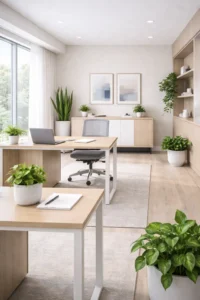
Plants belong in offices. Full stop.
They soften hard lines, improve air quality, and make spaces feel alive. I’ve watched dull offices transform instantly after adding greenery. Professional office decor feels warmer and healthier with plants around.
Low-maintenance options like snake plants, pothos, or peace lilies work best. They survive neglect, which makes them perfect coworkers. Place larger plants in corners and smaller ones on desks or shelves.
FYI, fake plants work too if done well. Just don’t buy the shiny plastic ones that look like they came from a gas station.
6. Create Visual Balance With Smart Layouts
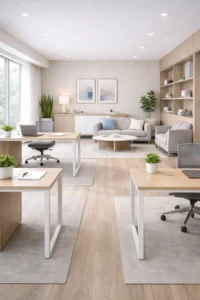
Layout matters more than most people think. Even beautiful decor feels wrong if furniture placement fights the flow of the room.
I always aim for clear pathways, balanced spacing, and defined zones. Desks shouldn’t feel cramped. Walkways shouldn’t feel like obstacle courses. The office should guide movement naturally.
Open offices benefit from subtle dividers like shelves, glass panels, or plants. These define areas without killing collaboration. Ever notice how some offices feel calm even when busy? That’s layout doing its job quietly.
A professional office decor setup doesn’t just look good—it moves well.
7. Layer Your Lighting Like a Pro (Not a Hospital)
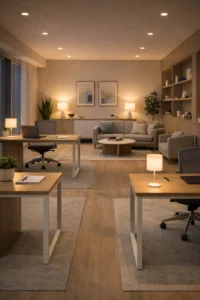
Overhead lighting alone kills the vibe. It feels harsh, flat, and exhausting by mid-afternoon. I learned this the hard way after spending years under lights that made everyone look tired by 10 a.m.
Professional office decor works best with layered lighting. Combine ceiling lights with desk lamps and soft ambient lighting. This setup reduces eye strain and creates depth in the space.
Desk lamps add focus where you need it most. Warm bulbs keep things cozy without feeling sleepy. Ever notice how good lighting instantly makes a room feel expensive? That’s not an accident.
8. Use Storage That Hides the Chaos
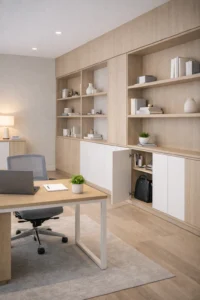
Clutter doesn’t just look bad—it messes with your head. I can’t focus when papers stack up like they’re plotting against me.
Smart storage defines professional office decor. Think built-in cabinets, floating shelves, and closed storage that hides the mess. Open shelves work too, but only when you keep them styled and intentional.
I always choose storage that blends with the decor instead of fighting it. Matching colors and clean lines keep everything looking polished. Ask yourself this: does your storage calm you or stress you out?
9. Create a Comfortable Meeting Area People Actually Like
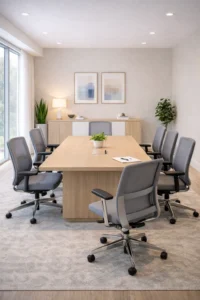
Meeting rooms don’t need to feel intimidating. They should feel inviting and functional.
Professional office decor shines when meeting spaces balance comfort and clarity. I prefer solid tables, comfortable chairs, and good lighting—nothing flashy, nothing stiff. Add art or plants to soften the mood.
Whiteboards or glass boards keep things practical without clutter. When people feel relaxed, conversations flow better. Ever noticed how better rooms lead to better ideas? Same meeting, different energy.
10. Let Employees Personalize (Within Reason)
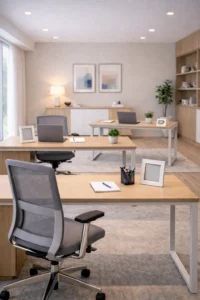
Total control kills creativity. Total chaos kills professionalism. The sweet spot sits right in the middle.
I always support light personalization—family photos, small plants, personal mugs, or desk accessories. These touches help people feel ownership of their space.
Set clear guidelines so things stay polished. Professional office decor doesn’t mean personality-free. It means personality with boundaries. Would you rather work in a space that feels human or one that feels like a showroom?
Exactly.
11. Use Dividers Instead of Solid Walls
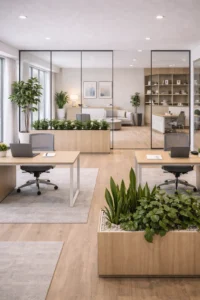
Walls block light and energy. Dividers guide it.
Glass panels, shelving units, or plant walls separate spaces while keeping things open. Professional office decor benefits from visual flow, especially in open layouts.
I love dividers that multitask—storage plus separation equals efficiency. They reduce noise without killing collaboration. Ever felt boxed in at work? Dividers fix that without closing people off.
12. Create a Small Break or Recharge Zone
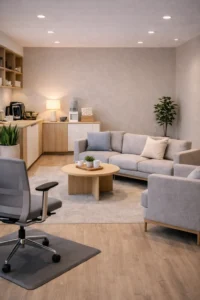
People need mental resets. Pretending otherwise just burns teams out faster.
I love offices with dedicated recharge areas—a lounge chair, a coffee nook, or even a small library corner. These spaces encourage short breaks without killing focus.
Use softer lighting, comfortable seating, and warmer textures here. This contrast helps the brain reset. Ever come back from a good break feeling sharper? That’s the point.
13. Use Sound Management to Reduce Stress
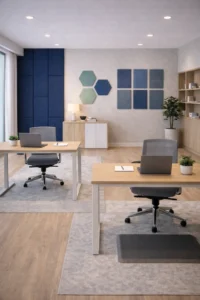
Noise quietly ruins productivity. You don’t notice it until it’s gone.
Professional office decor includes sound control, whether people plan for it or not. Rugs, fabric panels, curtains, and upholstered furniture absorb noise naturally.
I’ve seen offices transform simply by adding soft materials. Conversations stay clearer. Focus improves. Stress drops. If your office sounds like a cafeteria, this fix matters more than new furniture.
14. Mix Materials for a Richer Look
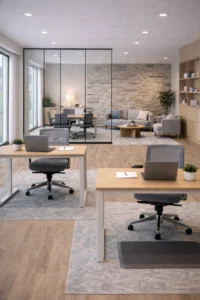
Flat, one-material spaces feel boring fast. Variety creates depth.
I love combining wood, metal, fabric, and glass to keep offices visually interesting without chaos. Wood warms things up. Metal adds structure. Fabric softens edges.
Keep the palette consistent so materials feel intentional. Ever notice how high-end spaces always mix textures? That’s not coincidence—it’s design maturity.
15. Make Small Offices Feel Bigger With Smart Tricks
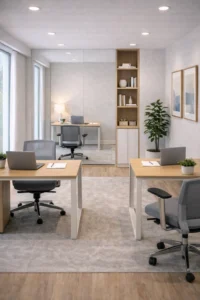
Not every office has unlimited space. That’s fine.
Mirrors, lighter colors, vertical storage, and multi-functional furniture all help. Professional office decor doesn’t depend on size—it depends on strategy.
I always think vertically in small offices. Shelves up high free floor space. Clean sightlines prevent visual clutter. Does your office feel cramped or just poorly arranged? There’s a difference.
16. Keep Decor Consistent Across the Entire Office
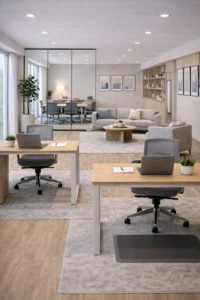
Nothing breaks the spell faster than inconsistency. One modern room, one outdated corner, and suddenly the office feels stitched together.
Professional office decor relies on visual consistency. Colors, materials, and design language should feel connected from room to room. This doesn’t mean everything matches perfectly, but it should all feel like it belongs to the same story.
I always do a mental walk-through. If one area feels “off,” it probably is. Consistency creates calm without anyone noticing why.
17. Refresh, Don’t Redesign, Over Time
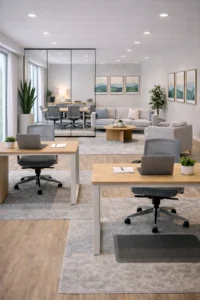
Offices don’t need full makeovers every year. That’s expensive and unnecessary.
I prefer small, intentional refreshes—new art, updated plants, better lighting, or swapped accessories. These changes keep the space feeling current without disrupting workflow.
Professional office decor evolves slowly and deliberately. Ever walked into an office that felt frozen in time? Yeah, let’s avoid that.
18. Balance Professionalism With Warmth
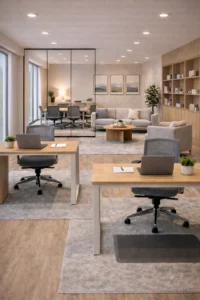
Too formal feels cold. Too casual feels sloppy. The magic sits in between.
I always aim for clean structure with soft edges—comfortable seating, warm lighting, textured fabrics, and human touches. This balance makes people feel relaxed without losing credibility.
Ask yourself this: would you feel comfortable hosting a client and working late here? If yes, you nailed it.
19. Design for Maintenance, Not Just Looks
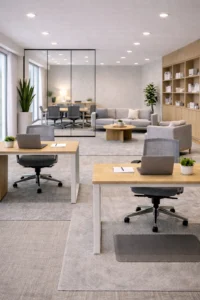
The prettiest office means nothing if it’s impossible to maintain.
Professional office decor works best when it stays practical. Choose durable materials, easy-to-clean surfaces, and furniture that handles daily wear. High-maintenance decor quickly turns into visual clutter.
I always think long-term. If something looks great today but ages badly, it doesn’t belong. Style should survive real life.
20. Trust Your Instincts (Seriously)
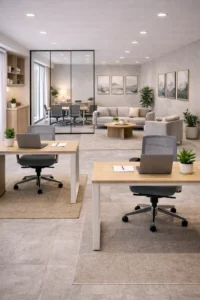
Here’s the truth nobody says out loud: rules matter, but instincts matter more.
If something feels right in your space, it probably is. Professional office decor succeeds when it reflects real people, not just design trends. I’ve broken plenty of “rules” and ended up with better results.
Ever walked into a space and just felt comfortable instantly? That feeling doesn’t come from checklists—it comes from intention.
Final Thoughts: Your Office, Done Right
Let’s recap without overcomplicating things. Professional office decor blends clarity, comfort, culture, and consistency. It supports focus without feeling rigid. It reflects identity without trying too hard.
You don’t need a massive budget or a design degree. You need thoughtful choices, honest priorities, and a willingness to improve things step by step.
So take a look around your office today. What’s working? What feels off? Fix one thing first. Momentum builds fast when the space finally works with you instead of against you.
And hey—if your office starts feeling so good that Mondays hurt a little less, don’t say I didn’t warn you.